13 February 2026
Posted by Susan L. Edser

Story Structure
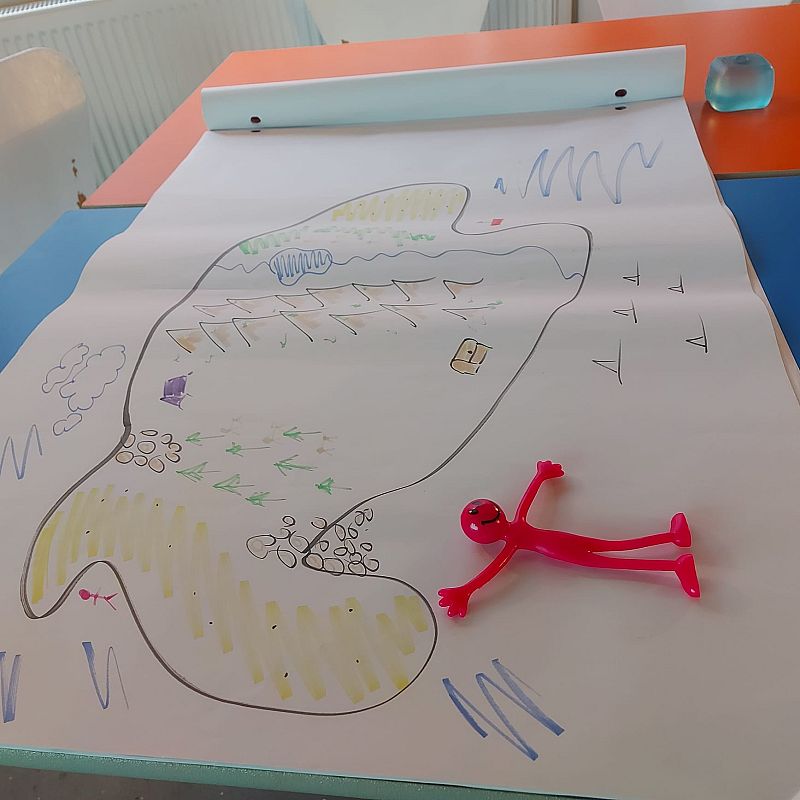
In the third session of the six-week pilot, we continued our progression of writing genres, from memoir to autofiction to fiction. Learning how to structure a fictional story provides a writer with stepping stones during the planning stages. We explored this through a group interactive exercise, helping a stranded person reach one side of a deserted island to the other. We gave them a name (Scarlett) and a backstory (she was going on holiday and had left a dog whom she loved). The inciting incident was a plane crash, and we decided how she overcame the challenges she faced, such as encountering unknown animals in the woods, navigating a mountain range, and crossing a river filled with crocodiles. She, of course, reached safety on the far side of the island and returned home as a changed person.
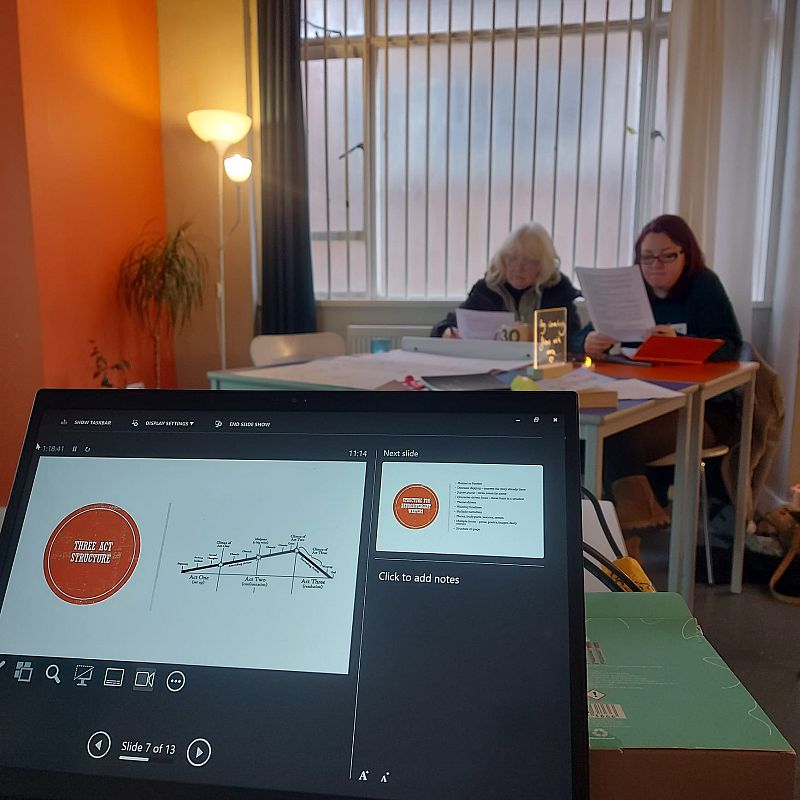
We discussed stories we know and how they follow the same pattern, whether explicitly (e.g. Dan Brown’s books) or more subtly (e.g. A Little Life by Hanya Yanagihara). I shared diagrams of the classic Three-Act Structure and expanded on its key features. A handout offered alternatives, including Joseph Campbell’s Hero’s Journey, Dan Harmon’s Story Circle, and Blake Snyder’s ‘Save the Cat’ Beat Sheet. As neurodivergent writers, these linear structures may not work for us, so we discussed which ones might be more useful, such as character-driven narratives or the dinosaur-digging method. The group shared how they write: some are planners, while others are pantsers; one likes to start at the end of a story, and another needs structure from start to finish. I also encouraged everyone to lean into their neurodivergent strengths and consider how words are structured on the page, and I shared examples of what this might look like.
I invited the group to put this learning into practice by drafting a story idea using one of the structures we discussed, and then to use the jigsaw approach by writing one scene from any part of the story. Three people read out their work, and all received applause and encouragement.
We ended by discussing how to maintain a writing practice between sessions. This included sticking to a regular writing time, being part of a group, or simply being kind to ourselves and recognising that we are doing enough. I shared a podcast (click here for the link) that was helpful for considering the myth of ‘finding time to write’ and offered ways to make the most of the time we do have.
Archive
Junior & Young Writers Week 3: Return From The Magical World
Junior & Young Writers Week 2: African Mythology
Problems, Problems, Problems...
Cautionary Tales & Christmassy Opening Lines
You've Gotta Have Pace, Pace, Pace
Junior & Young Writers Week 1: Alien Encounters
Junior & Young Writers: Week 5 - Play on Words Pt. 2
Junior & Young Writers: Week 11 - end of term showcase [build a bard workshop]
Junior & Young Writers: Week 10 - Greek Theatre - chorus stories
Junior & Young Writers: Week 9 - Greek Origin Stories - Spring
Rubber Ducks & Writing Festivals
Junior & Young Writers: Week 7 - Greek Hero Stories [the 12 labours of Hercules]
Junior & Young Writers: Week 12 [Wild Words] - Stuff & Things
Junior & Young Writers: Week 11 [Wild Words] - World Building 2
Junior & Young Writers: Week 10 [Wild Words] - World Building
Junior & Young Writers: Week 9 [Wild Words] - Mystery & Choose Your Own Adventure
Junior & Young Writers: Week 8 [Wild Words] - Spooky Sequels & Potion Poems
Junior & Young Writers – Week 10 (Writers’ Inspiration) – Final Showcase
Junior & Young Writers – Week 9 (Writers’ Inspiration) – Editing & Performance Tips
Junior & Young Writers – Week 8 (Writers’ Inspiration) – Cuteness
Time goes on by Tavinder Kaur New
Junior & Young Writers – Week 7 (Writers’ Inspiration) – Natural Solutions
Junior & Young Writers – Week 6 (Writers’ Inspiration) – The Language of Fruit and Veg
Junior & Young Writers – Week 5 (Writers’ Inspiration) – Adventures In Space
Tinklebobs and Bedraggled Angles
Junior & Young Writers – Week 4 (Writers’ Inspiration) – Our Environment
Fortune Tellers & Future Letters
Junior & Young Writers – Week 3 (Writers’ Inspiration) – Home
Young Writers - Week 10 (The Art of Writing) – Final Week Showcase
Junior Writers - Week 10 (The Art of Writing) – Final Week Showcase
Young Writers – Week 9 (The Art of Writing) – Choose Your Own Adventure
Junior Writers – Week 9 (The Art of Writing) – Choose Your Own Adventure
Young Writers – Week 8 (The Art of Writing) – Sequel Stories
Junior Writers – Week 8 (The Art of Writing) – Sequel Stories
Young Writers – Week 7 (The Art of Writing) – Picture Prompts
Junior Writers – Week 7 (The Art of Writing) – Picture Prompts
Young Writers - Week 6 (The Art of Writing) - Script-writing & Dialogue
Junior Writers - Week 6 (The Art of Writing) - Script-writing & Dialogue
Junior Writers – Week 5 (The Art of Writing) – Poetry
Young Writers - Week 5 (The Art of Writing) - Poetry Potions
Edward The Martyr - A Competition!
Mood Boards and Postcards from Space
Young Writers - Week 3 (The Art of Writing) - PLOT
Junior Writers - Week 3 (The Art of Writing) - PLOT
Moomin Stories and Hollywood Pitches
Young Writers - Week 2 (The Art of Writing) - Genre & Setting
Junior Writers - Week 2 (The Art of Writing) - Genre & Setting
Prompts, Dialogues, and Cliché
Story Structure Part One: Exposition and Beyond...
Young Writers - Week 1 (The Art of Writing) - Character
Young Writers - week 4 - Nature Writing [animals & wildlife]
Junior Writers - week 4 - Nature Writing [animals & wildlife]
Young Writers - week 3 - Nature Writing [trees/plants/flowers]
Junior Writers - week 3 - Nature Writing [trees/plants/flowers]
Young Writers - week 2 - 'fractured fairy tales'
Junior Writers - week 2 - 'fractured fairy tales'
Writing Competition - Stories From Our Streets
Stories From Our Streets Community Activity Pack
Thinking in-quiet, after the fire
Ekphrastic Jukebox - Writing to Music
ArtfulScribe LitFest Community Showcase 2023
Young writers exercise their creative power
The Mousetrap - Mayflower Young and Junior Writers Investigate Mystery!
Stories From Our Streets Launch!
Interview: In Conversation with Dr Victoria Leslie
The Missing Farmer/ Blackout Poetry & DADA
Exploring this wonderful World
Using props to create characters/ working as a writing room
Stories of the Dust and Character Questions